Damascus Steel Knife Care: Cleaning, Rust Prevention and Storage
A Damascus-pattern knife needs the same basic care as any good kitchen knife, plus some attention to moisture and finish. This guide explains what “Damascus” means on a modern blade, how to wash and dry it, how to prevent and treat rust, and how to store it.
Short answer
- Wash by hand with warm water and mild soap, then dry the blade completely straight away.
- Never use a dishwasher and never leave the knife soaking or wet.
- Store it with the edge protected, in a block, in a sheath or on a magnetic strip.
- Cut on wood or soft plastic, not glass or stone.
- A thin film of food-grade oil is an optional extra for humid kitchens or long storage.
What “Damascus” means on a kitchen knife
Historical Damascus steel was made from crucible steel known as wootz, imported from India and Sri Lanka, and its blades showed a distinctive water-like surface pattern. The steel on most modern “Damascus” knives is something different: pattern-welded steel, made by forge-welding layers of different steels together, folding and drawing them out until the layers number as many as the smith wants. Wikipedia notes that pattern-welded steel has been called Damascus steel since 1973, a use of the name that it calls technically incorrect.
The visible pattern appears because the layers differ in composition. The bands can be highlighted for cosmetic purposes by polishing or acid etching. On a kitchen knife that means the pattern is part of the finish of the blade, and it is a finish that is worth treating gently.
Construction varies. Some knives are layered throughout, others have a hard core steel with layered steel on the sides. The edge of a clad knife is normally the core steel. A listing should tell you the core steel, its hardness and how the layers are arranged; if it does not, ask the seller. The pattern alone does not tell you how well a knife cuts.
Why the steel matters for care
“Stainless” means stain-resistant, not stain-proof. Chromium forms a thin protective film on stainless steel, but the film can fail if the knife is left wet or dirty, and light discolouration can develop. If any layer or the edge of your knife is carbon steel rather than stainless, expect it to mark and rust more easily. When you are not sure, treat the knife as if it could rust and the routine below keeps both types in good shape.
Daily cleaning routine
- Rinse the blade soon after use, especially after cutting acidic foods such as citrus, tomatoes and onions.
- Wash with warm water, mild soap and a soft sponge. Skip abrasive pads, which can scratch the finish.
- Wipe from the spine toward the edge, never along the edge.
- Dry the whole knife with a towel straight away, including the handle and the joint where the blade meets it. Do not leave it to air dry.
- Put it away once it is dry.
Preventing and treating rust
Prevention is mostly drying. If you live somewhere humid, or you are putting the knife away for a while, wipe the blade with a thin layer of food-safe mineral oil or camellia (tsubaki) oil after cleaning, then wipe off the excess.
For a light spot of rust, make a paste of baking soda and water and rub the spot gently with a soft cloth. Rinse, dry thoroughly and add a thin coat of oil. Do not scrape the surface with steel wool or heavy abrasives, which can damage the pattern. If rust keeps returning, or there is pitting, contact the maker for advice.
Storage
- Magnetic strip. A wooden magnetic strip keeps blades visible and apart. Place the spine on the magnet first and lower the blade gently.
- Knife block. Make sure the knife and the slot are dry before you put it away.
- Sheath or roll. Good for travel and drawers. Wipe the blade dry first so moisture is not trapped.
- Loose in a drawer. Avoid this. The edge knocks against metal and the tip can chip.
Boards, foods and habits
- Use a wood or soft plastic board. Glass, stone and marble dull the edge quickly.
- Do not cut bones, frozen food or hard shells.
- Do not twist or pry with the blade, and use the spine, not the edge, to scrape food from the board.
- Never put the knife in the dishwasher. Heat and detergent can damage the blade and the handle.
- Do not leave it in the sink, soaking or wet.
Handles
Wood, resin and composite handles are all happier when they are not soaked. Wipe the handle dry with the blade and keep the knife out of standing water.
Honing and sharpening
Sharpening works on the edge bevel only, so it does not change the pattern on the sides of the blade. Between sharpenings, a light touch on a fine ceramic hone helps keep the edge aligned; the guide to honing vs sharpening explains when each is needed, and how to sharpen a santoku covers the whetstone routine. For more on the steel itself, see AUS-10 steel explained.
Frequently asked questions
Can Damascus knives go in the dishwasher?
No. Heat and detergent can damage the blade and the handle. Wash by hand and dry straight away.
Does Damascus steel rust?
It can. Stainless steel is stain-resistant, not stain-proof, and carbon-steel layers or edges rust more easily. Drying the knife immediately and storing it dry prevents nearly all problems.
Is Damascus steel better than regular steel?
The pattern shows how the blade was made, but it does not on its own tell you how well the knife cuts. Compare the core steel, hardness and edge geometry.
Do I have to oil a Damascus knife?
It is optional. A thin film of food-safe oil after cleaning helps in humid climates or before long storage; wipe off the excess.
Sources
Key facts come from these pages. Practical advice and worked examples in the text go beyond them and are not quotations from them. Specifications for any one knife are the manufacturer’s to confirm.
- Damascus steel, Wikipedia
- Pattern welding, Wikipedia
- Knife care and maintenance, Town Cutler
- Knife care and maintenance, KnifeSaga
Related guides
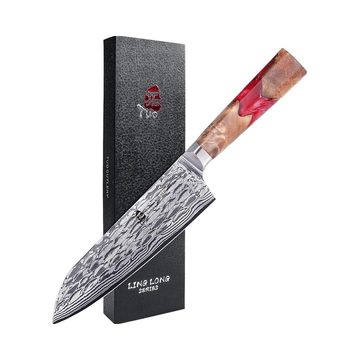
TUO Kitchen Pro 7-inch Santoku
AUS-10 Damascus, 60 HRC. Free US shipping. 30-day returns, return shipping paid by the customer.